Digital Marketing Glossary: Questions, Terms and Definitions

From SEO to color theory, our glossary answers the marketing questions businesses ask most.

STAY CURIOUS

Subscribe for Digital Marketing Questions Answered

Our glossary answers the questions every business owner asks — from SEO and browser caching to color theory and conversion funnels. No jargon. Just plain-English explanations and marketing strategies you can actually use.

Subscribe now and get digital marketing insights delivered straight to your inbox.

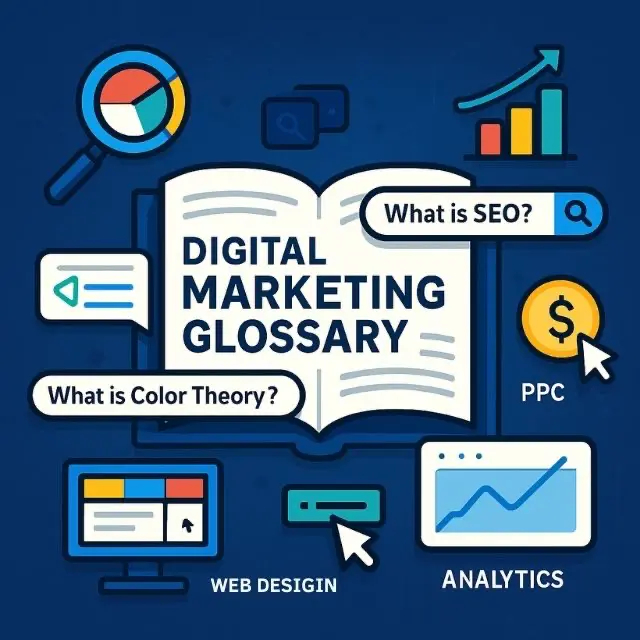
Illustration of a digital marketing glossary with icons for SEO, PPC, web design, analytics, and search queries like “What is SEO?” and “What is Color Theory?”

Digital Marketing Glossary: SEO, Web Design, and Marketing Terms Explained

Explore clear answers to common marketing questions with our Digital Marketing Glossary. Learn what SEO is, how browser caching works, what color theory means in design, and more. Each article breaks down digital marketing terms, strategies, and definitions — from content marketing and PPC to responsive web design and analytics — giving you the knowledge to improve your business online.

Digital Marketing Glossary Questions, Terms & Definitions Explained

What is digital marketing and why is it important?

Digital marketing is the use of online channels like search engines, social media, email, and websites to connect with customers. It’s important because it allows businesses to reach a wider audience, track results in real time, and compete cost-effectively against larger brands. In today’s digital-first world, digital marketing is essential for visibility, leads, and sales.

What are the main types of digital marketing?

The main types include SEO (search engine optimization), PPC (pay-per-click advertising), content marketing, social media marketing, email marketing, affiliate marketing, and influencer marketing. Together, these strategies help businesses increase online traffic, brand awareness, and conversions.

How does digital marketing help small businesses grow?

Digital marketing helps small businesses grow by targeting the right audience without wasting budget. Local SEO makes businesses appear in “near me” searches, social media builds brand awareness, and paid ads bring instant visibility. Unlike expensive print or TV ads, digital marketing is scalable and affordable.

What is SEO and how does it work?

SEO, or search engine optimization, improves a website’s visibility in search engines like Google. It works by optimizing site content, structure, speed, and backlinks to meet ranking signals. When done right, SEO helps a business appear higher in search results and attract more organic traffic.

What is the difference between on-page and off-page SEO?

On-page SEO focuses on elements you control within your site — content, keywords, meta tags, and internal links. Off-page SEO involves external signals like backlinks, social shares, and online mentions. Both are necessary to improve rankings and authority.

What are title tags and why do they matter for SEO?

Title tags are the clickable headlines that appear in search results. They matter because they tell both users and search engines what a page is about. A strong, keyword-rich title tag improves click-through rates and rankings.

What is technical SEO?

Technical SEO refers to optimizing a website’s backend so search engines can crawl and index it. This includes site speed, mobile-friendliness, structured data, XML sitemaps, HTTPS security, and fixing broken links. Without strong technical SEO, even great content won’t rank.

What is social media marketing?

Social media marketing uses platforms like Facebook, Instagram, LinkedIn, and TikTok to build brand awareness, engage with audiences, and drive traffic or sales. It includes both organic posts and paid advertising.

What is content marketing?

Content marketing involves creating valuable content — blogs, videos, infographics, or guides — to attract and engage your target audience. Unlike ads, content marketing builds trust and authority over time, leading to more organic conversions.

What is influencer marketing?

Influencer marketing is when brands partner with influencers — people with strong online followings — to promote products or services. Influencers create authentic content that reaches niche audiences, often driving higher engagement than traditional ads.

What is user-generated content (UGC)?

UGC is content created by customers rather than brands, such as reviews, social posts, or videos. It boosts credibility, builds community, and often performs better than brand-produced content. Many businesses encourage UGC to drive trust and conversions.

How does social media advertising work?

Social media advertising targets users with paid ads based on demographics, interests, and behaviors. Platforms like Facebook and Instagram use detailed targeting options to reach specific audiences. Ads can promote products, drive traffic, or generate leads.

What is PPC in digital marketing?

PPC, or pay-per-click advertising, is when businesses pay each time someone clicks their ad. Platforms like Google Ads and Bing Ads are popular for PPC. It drives immediate visibility and traffic, unlike SEO which takes time.

What is the difference between Google Ads and Facebook Ads?

Google Ads target users actively searching for products or services, while Facebook Ads target users based on demographics and interests. Google captures intent-driven traffic, while Facebook builds awareness and demand. Many businesses use both.

What is a cost-per-click (CPC) campaign?

A CPC campaign charges advertisers every time someone clicks their ad. Costs vary based on keyword competition, audience, and industry. CPC is a common model in Google Ads and social media advertising.

What are KPIs in digital marketing?

KPIs, or key performance indicators, are metrics used to measure success. Examples include website traffic, leads generated, cost per acquisition, and ROI. Tracking KPIs ensures your digital marketing campaigns stay aligned with goals.