How AI is changing search, design, and business software and what smart owners do next
AI is rapidly changing the way people work in industries across the world, and there are few places it’s as obvious as in online marketing.
Search engines are becoming “answer engines.” Software is becoming agentic, meaning it stops being a tool you operate and starts being a system that recommends and sometimes acts. Design is becoming an afterthought, rather than a core part of brand identity, whether you agree with it or not. If you’re a business owner who’s less hands-on with your marketing, not well read, and not living inside tech Twitter, here’s the framing that matters:
The internet is shifting from navigation to resolution. It’s not helping people find things. It’s helping them finish decisions without leaving the page. That changes how you get discovered, how you earn trust, how you stand out, and how you run marketing without lighting money on fire.
Search Is Turning Into a Vending Machine for Answers
Google used to be a map. Now it wants to be the destination.
AI-generated answers now appear directly on search results pages. Cost questions. Comparisons. Explanations. Step-by-step guidance. Often stitched together from multiple sources and delivered without a click.
If your impressions look fine but traffic is slipping, this is why. Your information is being used, but your site isn’t being visited.

What This Looks Like in Real Life
A customer searches:
- How much does a furnace replacement cost
- Is it worth fixing an AC compressor
- When should I replace my roof
- Do I need to upgrade my electrical panel
In the old model, you fought to rank and hoped they clicked your blog post.
In the new model, Google tries to answer the question directly. The customer may never visit any of the sites used to generate that answer.
The New Goal
The goal is no longer ranking first. It’s being quotable.
AI systems still rely on real sources. They still pull from websites. They still favor businesses that look credible, specific, and easy to extract information from.
Content that wins now:
- Answers questions directly
- Uses clear headings and structure
- Includes real constraints like cost ranges and timelines
- Shows proof that the business actually exists
Making your content human-readable and helpful to your users is still the priority. However, this shift in how users are finding information means that businesses must change their approach to web marketing.

Your Website Is Still Required, But Its Job Changed

Websites used to be the center of the marketing universe.
Now they’re more like infrastructure.
Your website is no longer the main funnel. It’s the credibility anchor, proof library, and conversion endpoint after the decision is mostly made elsewhere.
Customers form opinions before they ever click:
- Google Business Profiles
- AI answers
- Maps results
- Reviews and forums
- Social profiles
When they do land on your site, they’re looking to confirm you’re real, competent, and worth contacting.
What a Modern Website Needs to Do
- Confirm instantly what you do and where
- Show proof fast
- Make contacting you frictionless
- Answer high-intent questions with specifics
Design exists to remove friction, not impress.
Design Just Split Into Taste and Production
Generative AI permanently changed marketings, and one place it’s most visible is in how we approach visual and graphic design. AI hasn’t replaced designers, but it has removed the scarcity of images from their workflow: Stock photos and on-site photography quickly take the backseat when AI generated images are freely available:
Businesses can now generate concepts, mockups, illustrations, and ad visuals in minutes instead of weeks, albeit at a lower standard of quality.
That doesn’t mean design is solved, or a graphic designer is obsolete: Marketing psychology and visual design from a human will always outperform AI, but businesses now have an additional choice for budget content creation.
The New Risk
The danger isn’t lack of content. It’s too much low quality content that doesn’t connect with your clients.
AI can generate fifty versions of an image instantly. If your brand standards are unclear, or you don’t understand the goal or your campaigns, those images can do more damage than good for your brand.
For trust-heavy businesses like contractors, repairmen, or service businesses, real photos outperform perfect fake ones almost every time. They prove you’re real, local, have past projects, and aren’t a faceless company reselling their information to a subcontractor.

Why Marketing Still Requires A Human Touch
- Brand consistency over time. AI images tend to generate inconsistently, especially as time passes and conversations grow.
- Strategic restraint. Posting regularly is important, but knowing when you’re at risk of overdoing it is a big deal.
- Knowing what looks cheap or untrustworthy: AI can copy professional designs, sure, but it has trouble telling what key points made that design work to begin with.
- Understanding what your market finds credible: AIs follow industry standards and common tropes, as that’s what they’re trained on. They don’t understand current trends, what makes your clients trust you, or how to create an authentic, transparent marketing approach.
What Else Is AI Changing in Marketing?
Marketing Is Becoming Operational, Not Just Creative
The bottleneck is no longer ideas. It’s systems.
AI can generate copy, images, and variations endlessly. What separates winners now is how fast insights turn into action.
Modern marketing advantage comes from:
- Clean data
- Clear workflows
- Fast feedback loops
This is why quiet, boring companies with disciplined systems often outperform louder brands.
Business Software Is Becoming Semi-Autonomous
CRMs and email platforms are no longer passive databases.
They summarize calls, draft follow-ups, suggest next actions, and prioritize leads based on patterns you may not see.
This saves time. It also introduces risk.
What Changes for Owners
- Less admin work
- More pressure for clean data
- Greater risk of diluted brand voice
AI executes goals well. It does not choose good goals.
If your inputs are sloppy, your outputs scale the mistake.
The Real Risk of AI Adoption
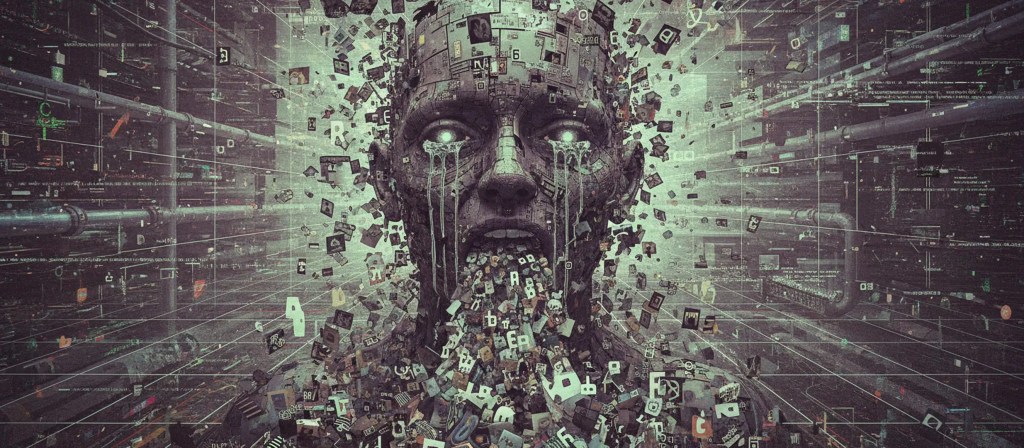
The real risk with AI isn’t replacement. It’s what happens when everyone starts sounding the same.
AI makes it easy to produce “good enough” messaging fast. The problem is that good enough, repeated everywhere, turns into noise. You end up with diluted positioning, vague differentiation, and copy that technically works but doesn’t stick.
When businesses outsource too much thinking to tools, they don’t become more efficient. They become harder to remember. Competence is no longer the bar. Specificity is.
Pitfalls of AI Marketing
- It sounds good but means nothing. Clean grammar, smooth phrasing, zero specifics. No numbers, no examples, no point of view.
- It could be written by or for anyone. Swap the logo and it still works. No industry detail, no buyer language, no context.
- Buzzwords replace thinking. “Leverage,” “innovative,” and “cutting-edge” show up because they sound right, not because they explain anything.
- The voice never shifts. Every page sounds the same. No emphasis, no friction, no opinion showing through.
- Nothing takes a stance. Strong marketing chooses sides. Bad AI content avoids being wrong, so it never says who it’s not for.
- Important questions get vague answers. Pricing, timelines, and constraints are hinted at instead of explained.
- The structure feels manufactured. Perfect headings and pacing, but no sign a human made real decisions while writing.
- It explains basics instead of sharing insight. Lots of words, little experience.
- CTAs are generic and lazy. “Learn more” everywhere because no one decided what action actually matters.
- It feels unearned. Not rushed, just empty. Like it was finished before anyone thought hard.
What Smart Business Owners Are Doing Instead

Businesses using AI effectively aren’t chasing tools or trying to keep up with every new feature. They start by getting the fundamentals right, because automation only works when there’s something solid underneath it.
That means clarifying positioning before layering on AI. They know exactly who they serve, what problems they solve, and why someone should choose them before they automate messaging, outreach, or content. They also focus on building real proof early, case studies, outcomes, experience, and clear examples, rather than trying to scale visibility without trust.
Most importantly, they keep human judgment in the loop where it actually matters. AI handles speed, repetition, and organization. People handle strategy, prioritization, and nuance. Used this way, AI supports decisions instead of quietly making them for you.
In practice, this shows up as AI being used to compress time and reduce friction across the business, not as a shortcut around hard choices. The businesses getting the best results still decide who they are and who they’re for. AI just helps them execute that clarity faster and more consistently.
What to Do Next
Start by prioritizing refining your message over volume of posts. Publishing more content won’t help if the message itself is fuzzy, not converting, or not engaging.
Turn your website into reference-grade content that actually answers buyer questions with specifics, including pricing ranges, timelines, and real tradeoffs. Strengthen trust signals with proof that shows experience, not just claims.
Use AI inside your systems to save time, not to define your identity or produce the bulk of your content. And before you automate anything tied to sales or marketing, clean your CRM. Automation only magnifies what’s already there.
The internet hasn’t become harder. It’s become less forgiving. Businesses that know who they are and can explain it clearly have a real advantage right now.
AI didn’t kill marketing. It just removed the padding between low-end marketing and DIY marketing.
Comparison Table: Marketing in the 2000s vs 2010s vs Mid-2020s
| Category | 2000s: Early Web Era | 2010s: Social + SEO Boom | Mid-2020s: AI + Answer Economy |
|---|---|---|---|
| Primary Goal | Get a website online and visible | Drive traffic and grow audiences | Be the trusted source AI and users rely on |
| How People Found Businesses | Directories, basic search, bookmarks | Google search, social feeds, ads | AI answers, Maps, reviews, zero-click search |
| Search Experience | Simple keyword matching | SEO-driven rankings and content depth | Direct answers generated from multiple sources |
| Content Strategy | Static pages, brochures, basic info | Blogs, long-form content, keyword targeting | Structured explanations, FAQs, reference-style content |
| Website’s Role | Online business card | Main traffic and conversion hub | Credibility anchor and source material for AI systems |
| Design Philosophy | Looks professional = trust | Brand identity and visual differentiation | Clarity, speed, and trust signals over aesthetics |
| Graphic Production | Manual design, slow iteration | Professional design tools and teams | AI-generated visuals + human judgment |
| Social Media Use | Minimal or nonexistent | Audience growth and engagement | Trust verification and brand confirmation |
| Paid Advertising | Banner ads, basic PPC | Search ads, social ads, retargeting | High-intent ads supporting organic trust signals |
| Marketing Tools | Email lists and basic analytics | CRMs, marketing automation, dashboards | AI-assisted CRMs, predictive insights, workflow automation |
| Decision Making | Gut instinct and anecdotal feedback | Data-informed campaigns and A/B testing | Human judgment supervising AI recommendations |
| What Wins | Being online at all | Visibility and volume | Clarity, proof, structure, and operational speed |
| What Fails | No web presence | Thin content and generic branding | Fluff, vague messaging, and trust gaps |
Further Reading & Resources: How AI Is Changing Marketing
- McKinsey: The State of AI
- McKinsey: The State of AI 2024
- Google Search Central: Creating Helpful, Reliable, People-First Content
- Google Search Central Documentation
- Google: AI in Search
- OpenAI: Best Practices for Prompt Engineering
- Microsoft Learn: Prompt Engineering Techniques
- Nielsen Norman Group: UX Research Articles
- Nielsen Norman Group: Banner Blindness Research
- AP News: EU Antitrust Probe into Google and AI
- The Verge: Google Zero and the AI Search Traffic Shift
How is AI changing marketing right now?
AI is changing marketing right now by automating analysis, personalization, and content creation at a scale humans cannot match. Marketers are using AI to write ads, personalize emails, predict customer behavior, optimize ad spend, and analyze performance in real time, shifting marketing from intuition to data-backed execution.
Will AI replace marketers?
AI will not replace marketers, but it is replacing repetitive marketing tasks. Strategy, brand voice, creative direction, and judgment still require humans, while AI handles execution and optimization, meaning marketers who ignore AI risk falling behind those who embrace it.
What marketing tasks can AI automate?
AI can automate marketing tasks such as content drafting, ad testing, bid optimization, email segmentation, social scheduling, and performance reporting. It is most effective for high-volume, repeatable work that relies on pattern recognition.
Is AI-generated content good for SEO?
AI-generated content can be good for SEO when it is accurate, edited, and genuinely helpful. Search engines prioritize quality and usefulness, not authorship, but thin or generic AI content without expertise can hurt rankings.
How is AI changing paid advertising?
AI is changing paid advertising by automatically optimizing targeting, bids, and creative variations. Ad platforms use machine learning to allocate budget, identify high-intent audiences, and test creatives faster than manual campaign management.
Can small businesses use AI marketing tools effectively?
Small businesses can use AI marketing tools effectively to compete with larger companies. AI reduces labor costs and makes advanced capabilities like automation, personalization, and analytics accessible without large teams.
What skills do marketers need in an AI-driven world?
Marketers in an AI-driven world need skills in strategy, prompt writing, data interpretation, and creative oversight. The ability to guide AI tools and judge their outputs is more valuable than manual execution alone.
How does AI affect content marketing strategy?
AI affects content marketing strategy by shifting the focus from content production to differentiation. Since AI can generate content quickly, competitive advantage now comes from original insights, strong positioning, and editorial direction.
What does the future of marketing look like with AI?
The future of marketing with AI is more personalized, predictive, and efficient. Humans will focus on strategy, creativity, and trust, while AI handles execution, optimization, and analysis behind the scenes.